Source Car Emergency Starter for Cars, Trucks, and Motorcycles
Explore 30 verified car emergency starter options from Chinese manufacturers. Compare specifications like peak current, battery capacity, and input types to find the right jump starter for passenger cars, trucks, and motorcycles; compare the available evidence and request quotations based on your requirements.
Key considerations
Products List


Comprehensive Sourcing Guide
Car Emergency Starter Sourcing Guide
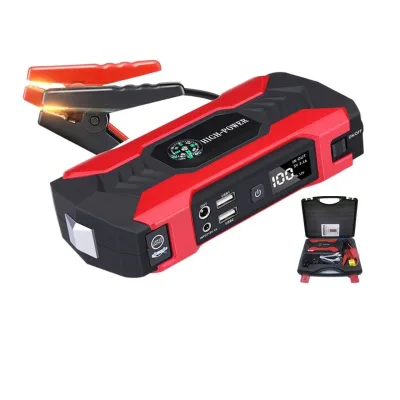
Sourcing a reliable car emergency starter requires balancing technical performance with commercial viability, as these devices serve as critical backup power for vehicles ranging from motorcycles to heavy trucks. Buyers must navigate a market where specifications vary significantly, particularly regarding peak current output and battery chemistry. The core keyword "car emergency starter" encompasses a broad category of jump starters and power supplies, often featuring lithium-ion batteries with capacities around 28000mAh and working voltages of 12V. Understanding these baseline attributes is essential for aligning product capabilities with specific fleet or retail needs.
Procurement decisions should also account for regional manufacturing hubs and customization options, as many suppliers in Guangdong and Zhejiang offer tailored solutions. Attributes such as digital screens, LED lights, and spark-proof technology are common differentiators that enhance user safety and convenience. However, buyers must verify that these features are integrated correctly without compromising the device’s structural integrity or electrical safety. This guide provides a structured approach to evaluating suppliers, ensuring that selected products meet both functional requirements and regulatory standards for international distribution.
Product Scope and Observed Listing Signals
The observed market signals indicate a diverse range of product models, including HXN-64705, S-670B, and various 309-series units, each with distinct packaging and physical dimensions. Listings show size variations from compact 17x8.8x3.8cm units to larger packages measuring 12x11x25.5cm, reflecting different internal battery configurations and housing designs. Color options typically include blue, green, light green, and red, allowing for brand differentiation or user preference. These physical attributes are critical for logistics planning, as single package weights can reach 1.690kg, impacting shipping costs and handling requirements for bulk orders.
Commercial signals reveal a wide price range of $2.5 to $224 USD, driven by differences in peak current, battery capacity, and included accessories like USB keys. Minimum order quantities (MOQ) vary from 1 to 1000 units, with some suppliers setting a standard MOQ of 500, which may influence inventory strategy for small businesses. Delivery times are generally cited as 20-30 days, a factor that must be integrated into supply chain timelines to avoid stockouts. Buyers should interpret these signals as indicative of market variability rather than fixed benchmarks, requiring direct negotiation to secure terms that align with their specific volume and timing needs.
Technical Specifications to Verify
Technical verification must begin with the battery type and capacity, as lithium-ion cells are standard but vary in cycle life and energy density. Specifications often cite a cycle life of 3000 cycles and a total output of 74Wh, but buyers should confirm the actual usable capacity under load conditions. Peak current ratings, such as 3000A, are critical for starting larger engines, yet these figures must be validated against real-world performance data. Input specifications typically include Type-C ports for 5V and 12V charging, ensuring compatibility with modern power sources, while output options like USB-A and USB-C provide versatile charging capabilities for external devices.
Additional functional attributes, such as digital screens and spark-proof technology, enhance usability and safety but require rigorous testing to ensure reliability. The working voltage is consistently listed as 12V, suitable for standard automotive applications, but buyers should verify compatibility with specific vehicle types, including passenger cars, motorcycles, and trucks. Packaging standards, ranging from color boxes to standard sea packages, also impact product protection during transit. It is essential to request detailed technical datasheets that outline electrical parameters, thermal management features, and durability tests to ensure the product meets operational demands in diverse environmental conditions.
Compliance and Safety Documentation
Compliance documentation is non-negotiable for importing electronic devices, particularly those containing lithium-ion batteries. Certifications such as CE, RoHS, and FCC are commonly cited, indicating adherence to European and North American safety and environmental standards. Buyers must verify the validity of these certificates through the issuing bodies, as counterfeit documentation is a risk in global trade. Additionally, UN38.3 testing is crucial for lithium batteries, ensuring they can withstand transportation hazards. Without proper certification, products may be rejected at customs or face legal liabilities in target markets, making verification a primary step in supplier qualification.
Beyond certifications, buyers should request test reports for specific safety features, such as spark-proof mechanisms and overcharge protection. These tests demonstrate that the device can operate safely under fault conditions, protecting both the user and the vehicle’s electrical system. Documentation should also include material safety data sheets (MSDS) for the battery components, which are required for shipping hazardous materials. Ensuring that all compliance documents are up-to-date and specific to the model number being purchased prevents delays and ensures that the product meets the regulatory requirements of the destination country.
Cost Drivers and Commercial Terms
Cost drivers in the car emergency starter market include battery capacity, peak current output, and the inclusion of advanced features like digital displays and multiple USB ports. Higher capacity batteries and greater peak currents typically command higher prices, reflecting the increased cost of raw materials and manufacturing complexity. Customization options, such as branded packaging or specific color schemes, add to the unit cost but can enhance brand value in retail markets. Buyers should analyze the total cost of ownership, including shipping, tariffs, and potential returns, rather than focusing solely on the unit price.
Commercial terms, including MOQ and lead times, significantly impact cash flow and inventory management. Suppliers often require MOQs of 500 units or more, which may necessitate larger upfront investments. Lead times of 20-30 days are standard but can vary based on production schedules and raw material availability. Buyers should negotiate flexible payment terms and clear delivery schedules to mitigate risks. Understanding these commercial dynamics allows for better budgeting and ensures that procurement strategies align with sales forecasts and market demand fluctuations.
Supplier Qualification and Quality Control
Supplier qualification involves assessing manufacturing capabilities, quality control processes, and past performance. Buyers should prioritize suppliers with established facilities in regions like Guangdong and Zhejiang, known for their electronics manufacturing expertise. Factory audits, whether virtual or on-site, can reveal insights into production lines, testing equipment, and workforce training. Suppliers offering customized processing services demonstrate flexibility and a commitment to meeting specific buyer requirements, which is valuable for private label projects. Verifying these capabilities ensures that the supplier can consistently deliver products that meet quality standards.
Quality control measures must be clearly defined and enforced throughout the production process. Buyers should request samples for pre-production testing to verify specifications and functionality. During mass production, third-party inspections can be conducted to check for defects, packaging accuracy, and compliance with agreed-upon standards. Establishing a clear quality agreement with the supplier, including criteria for acceptance and rejection, helps maintain product integrity. Regular communication and feedback loops are essential for addressing issues promptly and ensuring continuous improvement in product quality and supplier performance.
Long-Term Procurement Checks
Long-term procurement success depends on continuous monitoring of supplier performance and market trends. Buyers should establish key performance indicators (KPIs) for delivery reliability, product quality, and customer satisfaction. Regular reviews of these metrics help identify potential issues early and allow for corrective actions. Additionally, staying informed about technological advancements in battery technology and safety standards ensures that sourced products remain competitive and compliant. Building a strong relationship with suppliers fosters collaboration and can lead to better pricing and priority treatment during peak demand periods.
Risk management strategies should include diversifying the supplier base to mitigate the impact of supply chain disruptions. Maintaining a buffer stock of critical components or finished goods can protect against unexpected delays. Buyers should also regularly update their compliance documentation to reflect changes in regulations and standards. By proactively managing these aspects, buyers can ensure a stable and efficient supply chain, supporting long-term business growth and customer satisfaction in the car emergency starter market.
FAQs
What is the peak current for this car emergency starter?
The peak current reaches 3000A for reliable engine ignition. This high output supports starting passenger cars, trucks, and motorcycles effectively. The device operates at 12V working voltage and includes a digital screen for status monitoring. It also features spark-proof technology for safe operation during jump-starting procedures in various conditions.
Can this jump starter be customized for specific branding needs?
Yes, customized processing is available for this product. Buyers can request specific branding or packaging modifications to suit their market requirements. The supplier offers customization options to align with unique business needs. This flexibility allows for tailored solutions while maintaining the core functionality of the emergency power supply unit for automotive use.
What certifications does this car emergency starter hold?
The product holds CE, RoHS, and FCC certifications for safety and compliance. These standards ensure the device meets international regulatory requirements for electronic products. The lithium-ion battery also adheres to UN38.3 standards for transport safety. These certifications provide assurance of quality and reliability for global distribution and use in various automotive applications.
How long is the delivery time for bulk orders?
The standard delivery time is 20-30 days for production and shipping. This timeframe applies to typical bulk orders placed with the manufacturer. Buyers should account for this lead time when planning inventory replenishment. The timeline ensures proper manufacturing quality control and logistics coordination for international shipments from the production facility.
What is the minimum order quantity for this product?
The minimum order quantity is 500 units for this car emergency starter. This MOQ applies to standard orders placed with the supplier. Buyers must meet this threshold to initiate production. The quantity requirement helps optimize manufacturing efficiency and cost-effectiveness for both the supplier and the purchasing party in B2B transactions.
What is the battery capacity of this jump starter?
The battery capacity is 28000mAh for extended power reserve. This high capacity supports multiple jump-start cycles before recharging is needed. The device also provides 74Wh total output for auxiliary power needs. The lithium-ion battery type ensures durability and a cycle life of 3000 charges for long-term reliability.